
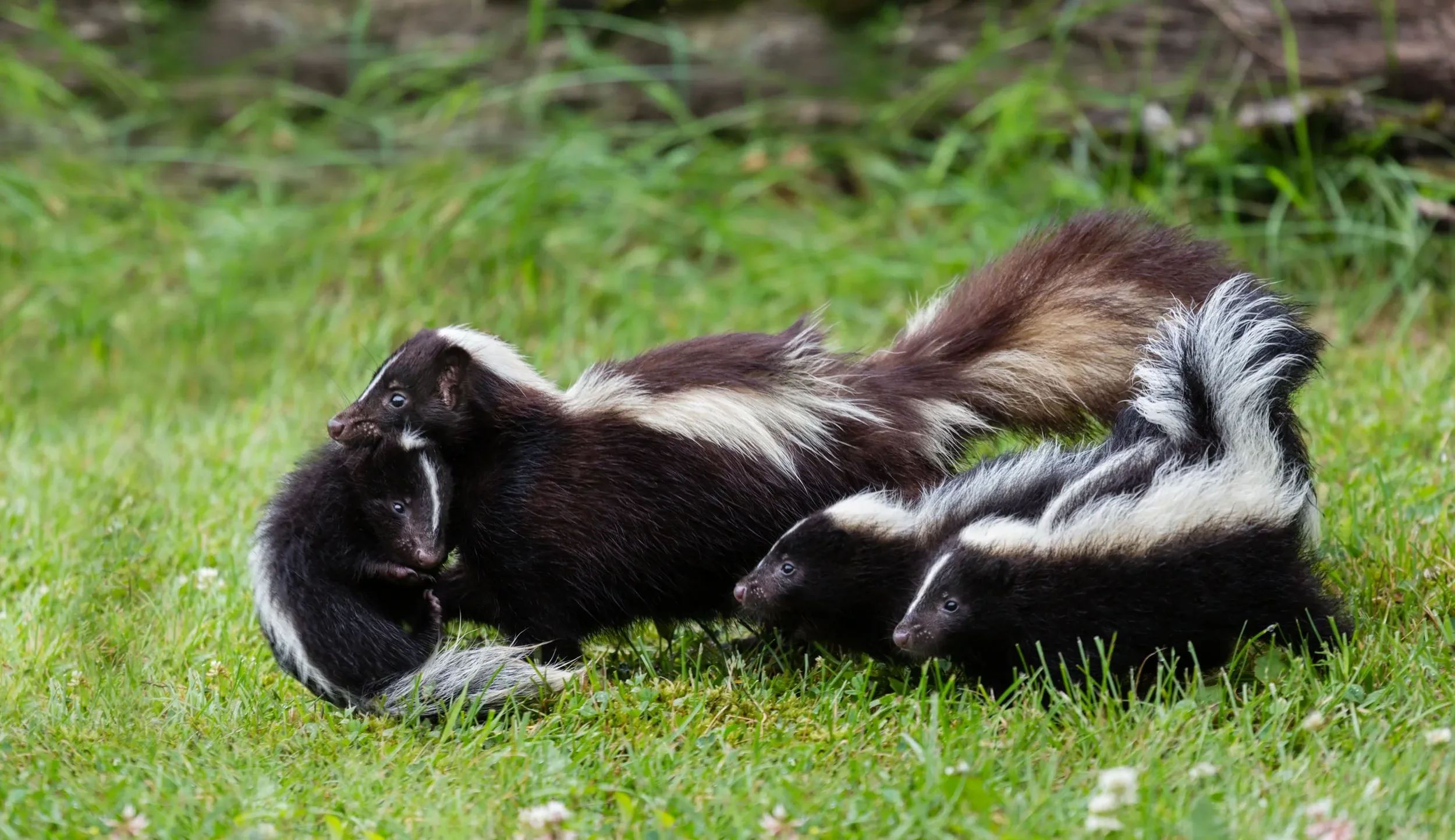
Skunks
Skunks are excellent pest controllers, eating insects, rodents, snakes, and yellowjacket nests.
Daytime activity is normal, especially during the spring and summer (baby season) and winter months with warmer day temperatures
Poor eyesight—may not see you
Quickly become hypothermic
Spray only if threatened (they reserve this defense mechanism because it takes 10 days to replenish)
DO NOT use rat poison - the poisoned mouse/rat will kill any animal, including your cat if they consume the poisoned mouse/rat
Orphaned or Injured:
Infants should never be without mom or siblings
Fluffy fur does not equal healthy kit
Keep the animal warm, dark, and quiet
Use gloves and a towel to place in a secured container
Gently tuck their tail to reduce spraying risk
If spayed, DO NOT use water to clean. Only use hydrogen peroxide, dish detergent, and baking soda - combine these ingredients, lather, and then rinse. You may apply it to your body, clothes, and your dog.
If bitten, the skunk must be euthanized—never allow handling.
Public Notice: The canine distemper virus is predominately the killer of most wildlife. The victims usually present with ocular and nasal discharge (“goopy” eyes and snotty nose), lethargy, head pressing due to a severe headache, ataxia (walking drunk like), tremors or seizures, and unaware of their surroundings. If you encounter a skunk with such symptoms, please contact NC Wildlife Rehab immediately at 704-877-3037. No animal should be left to suffer a horrible death. Humane euthanasia is the last gift we can provide animals suffering.
➡️ Text NC Wildlife Rehab: 704-877-3037 if you find an injured, orphaned, or sick skunk.